from the column —

Ideas Worth
Discussing.

Notes to self that I’ve fleshed out with links I felt could be helpful for you. My aim is always to start a conversation, share resources that can be applicable, and invite others to be in community while challenging my POV if compelled to.

← Back to site
from the column —

Ideas Worth Discussing.

2 pieces published
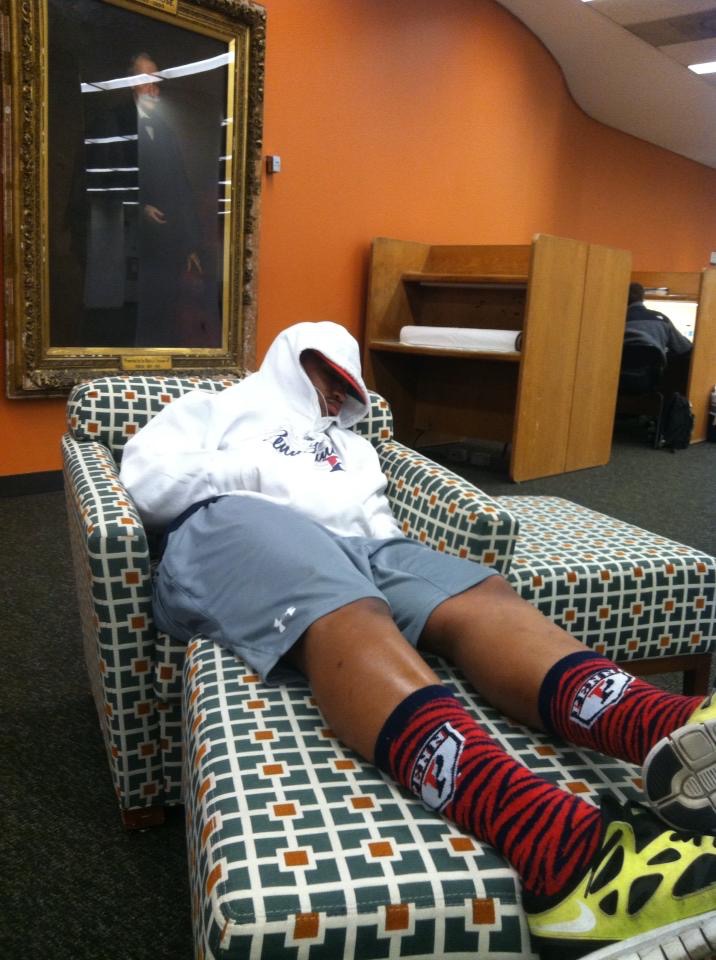
Justyn Williams resting — sleep recovery article

Your Clock Is About to Lie to You. Here’s How to Sleep Through It.

I’ve been thinking about this a lot lately. Not just because of the brutal time change coming the same day I’ll be running the LA marathon (pray for me), but because sleep keeps coming up in conversations I’m having — with clients, with people I know, with anyone living a full, busy life who’s quietly wondering why they wake up tired every single day.

A few months ago, I fell into a nearly four-hour podcast episode on FoundMyFitness featuring Dr. Rhonda Patrick and Dr. Michael Grandner, a sleep scientist who’s built his career studying what goes wrong when we don’t sleep well and what we can actually do about it. I’m not exaggerating when I say I listened to it THREE. TIMES. The kind of “oh, so that’s why” clarity that episode gave me was worth every minute.

I shared it with a contact of mine who had been struggling with sleep for decades. He told me the analogies and explanations in the episode were so insightful that he immediately booked a CBT-I appointment — a behavioral treatment for insomnia they discussed — to finally try to address it without medication. That was the moment I realized I should stop keeping this one to myself.

I’m not a sleep specialist. I’m a performance coach. But I spend a lot of time helping people build better relationships with their bodies, and sleep is the foundation everything else sits on — including recovery, performance, mood, and metabolism. So consider this my field notes: what I learned, what I’ve tried, and what’s actually worth your time to change.


Your Bed Is Sending the Wrong Signals

Here’s the thing about your brain: it runs on associations. Whatever you do consistently in a space, your brain starts to expect it there. If you regularly scroll your phone in bed, work from bed, or just lie awake anxious in bed — your brain is being trained that the bed is a place to be alert.

Dr. Grandner’s work draws heavily on a behavioral approach called CBT-I (Cognitive Behavioral Therapy for Insomnia), which addresses sleep at the level of these trained associations. The practical application is surprisingly actionable: reserve your bed strictly for sleep. If you wake up at 3am and can’t fall back asleep, get up and sit somewhere else until you feel sleepy again. It feels counterintuitive, but you’re essentially retraining the association.

And if eliminating screens in bed entirely isn’t realistic — because for most of us, it isn’t — try standing or sitting beside the bed while you scroll, rather than lying in it. Even this small shift tells your brain something different about what that space is for.

I started putting my own phone on a desk across the room before bed. It sucked, but it now sits somewhere I can’t reach from where I sleep, so I actually have to get up and walk to it. Just that. And I noticed my sleep become less disrupted, waking up more rested than before. The friction of having to physically get up to reach it was enough to break the reflex.

Light Is the Most Overlooked Sleep Tool

Your circadian rhythm — the internal clock governing when you feel sleepy and when you feel awake — is regulated primarily by light. Most people know morning sunlight matters. What they don’t always realize is that consistent daytime light exposure also buffers you against nighttime light disruption. Getting bright light throughout the day builds up a kind of resistance to the screens you’re probably staring at after dinner.

When you can’t avoid screens at night, blue-blocking glasses can help. However, Dr. Grandner is specific here: they need orange or red lenses, not the clear or lightly tinted ones most people buy. The filtering has to actually be meaningful to work.

The Melatonin Conversation

Here’s the one that surprised me most. The strength of over-the-counter melatonin supplements varies wildly, and what’s on the bottle often isn’t what’s in the bottle. Dr. Grandner explained that supplements are typically manufactured 30–50% stronger than labeled, so that as the product degrades over its shelf life, it’ll fall within legal ranges by the expiration date. Which means a pill you bought last month is likely significantly stronger than advertised.

More importantly, less is often more with melatonin. Its role is as a timing signal, not a sedative. A tiny dose timed correctly can help shift your sleep window. A large dose taken at the wrong time can actually work against you. If you’re using melatonin, consider cutting your dose in half and look into when you’re taking it, not just how much.

Two supplements that might actually be keeping you up: B12 and glutamine, if taken close to bedtime. Worth checking if those are in your evening stack.

The One Caffeine Habit Worth Trying

Wait an hour after waking before your first coffee. Counterintuitive given how deeply most of us have ritualized that morning cup, but there’s a real reason: adenosine — the compound that builds up while you sleep and drives the urge to sleep again — takes about 60 minutes after waking to accumulate enough for caffeine to meaningfully block it. Hit it too early and you’re masking the natural clearing process, which can create that mid-morning crash that sends you back for a second cup.


The Bottom Line

You probably can’t change your sleep overnight (no pun intended). But small behavioral shifts actually move the needle in ways that most generic sleep advice doesn’t.

  • Bed as a signal
  • Light as a tool
  • Less melatonin
  • Delayed caffeine

They’re not aspirational. They’re mechanical.

With daylight saving time approaching, the clock is already working against you. You might as well stack a few things in your favor.

If you want to go deeper, the episode that started all of this for me is worth every minute of your commute, workout, or long walk: FoundMyFitness #107 — “Why You Can’t Sleep (and How to Fix It)” with Dr. Michael Grandner. Listen here.

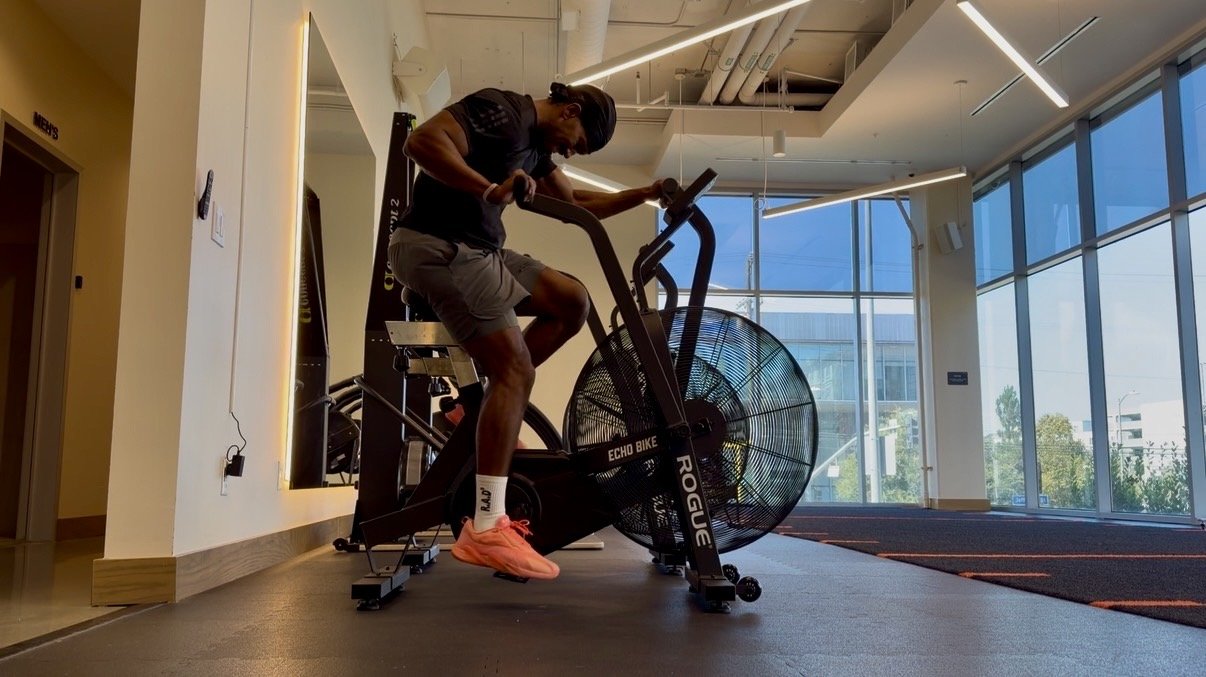
Justyn Williams in the gym — New Year gym rush article

Tips for Sticking Past the New Year Gym Rush

However, statistically speaking, you’re unlikely to make it past the end of the month. It’s said that around 80% of new gymgoers drop off by mid-February. And what gyms don’t want you to know is they sign up more than 10x the amount of members their space can actually support so they can hit their bottom line. Over time, they’re counting on you to drop out.

As a fitness coach who’s spent years in commercial gyms, CrossFit gyms, and boutique gyms, I’ve seen firsthand what happens around this time of year — people start off strong, become overwhelmed by the crowd or dejected by the slow rate of progress, and decide exercising isn’t for them.

There’ve been countless thinkpieces written on this topic before mine — so what is it that really makes this year or my take any different?

Aside from offering you solutions to common obstacles that drive resolutioners to quit the gym, I’ve created an 8-week base builder workout plan to get you past Valentine’s Day so that if you somehow don’t find love anywhere else, you at least fall in love with your fitness.

Obstacle: Gymtimidation

Gymtimidation is an anxious feeling you get when you’re new to the gym. It may come from being fearful about using equipment incorrectly, feeling like others are critiquing your exercise technique, or from being self-conscious about your body image.

If nothing else I say here sticks, what I hope you take away above all else is this: the psychological aspect — the “mental fitness” — is most critical to your success. We’re often our biggest opp. One of my favorite lessons I’ll share with you from my time doing improv is to “fire the judge.” Get rid of that inner voice making you feel ashamed for doing something that’s literally improving your life.

Obstacle: Realistic Goal Setting

Expecting massive changes in a short window of time is setting yourself up for failure. I’ve met with people who expressed lofty goals like wanting to work out (hard) 5 days a week or lose 30 pounds in 2 months, but they hadn’t exercised in weeks nor exhibited other lifestyle habits that would indicate these to be reasonable short-term goals. Inevitably, when quick results don’t show up, frustration and demotivation set in.

Obstacle: Planning and Scheduling

Fitting workouts into your preestablished lifestyle is HARD. It requires inconvenience. It requires compromise. It requires navigating unforeseen schedule changes or planned travel that throw your routine off track.

Obstacle: Financial Burden

The financial investment of gym memberships starts to feel less valuable as motivation wanes. Costs often extend beyond the membership itself, too. The cost of food to support your increased activity. The cost of fitness attire. The commute to and from the gym. The difficulty finding childcare for new parents. Time is money and it all adds up.

Obstacle: Boredom, Monotony + Overcomplication

These are two sides of the same coin. On one hand, doing the same exercises for weeks on end can lead to mental fatigue. On the other hand, stretching yourself to keep things fresh by doing new exercises every time you come into the gym may feel fun, but can ultimately lead to you spinning your wheels.

These challenges exist for everyone. Yet I’ve trained traveling executives, touring dancers, sleepless chefs, cross country truck drivers, elderly grandparents, and parents of newborns who’ve found a way to maintain a thriving active lifestyle — so there’s no reason you can’t, too.

Solution: Understand Your “Why”

Reflect on who or what your why is. Write it down. Commit it to memory. It’ll function as the bedrock for your consistency when your motivation disappears, which happens to everyone.

One of my big “why” reasons that I regularly reflect on when I’m lacking motivation is my grandmother (RIP) who struggled with low bone density and crippling arthritis. She’d always encourage me to remain active as I got older, and she’d often tell me how I inspired her to go for walks even while she navigated cancer treatment in her later years. When I’m slogging my way through a crappy workout or a hard run, I’ll literally tell myself “I’m getting this done for you, Nana.”

Solution: Frameworks and Systems > Freestyling

You’re busy. You already had a full life before committing to the gym so your renewed effort to get fit likely isn’t going to make you less busy.

Be strategic about your health. Many people aren’t, and that’s where I’ve seen them falter. Schedule your workouts into your calendar as appointments and plan your workouts in advance so you aren’t wasting time guessing what you’ll do when you’re there.

Whether you create your own workout plan using the many resources available or you partner with a certified coach who helps you develop a framework, having a program allows you to better understand why you’re doing certain exercises, which will also increase your ability to make sensible adjustments to your workouts when needed.

Attempting to freestyle your health by hoping that your new fitness routine is going to magically fit into your lifestyle amounts to a pipedream. Think about it like this: could you just show up to work week after week hoping to wing it and maintain success long term? Probably not. The same goes for your fitness.

Solution: Find Community

Social support significantly improves your probability of sticking to a workout plan. Join the gym with a friend. Introduce yourself to someone at your gym, even the front desk staff. Hire a trainer. Join a class. Find a fitness community that speaks to you and will help you stay accountable to yourself and your goals.

I’m a part of a group my friend created on Instagram called The 300 Club. It’s composed of people from all over the world who’ve taken on the goal of supporting each other to complete 300 workouts throughout the year.

Solution: Set Specific Goals

Your aim to “lean out” may be well intentioned, but it’s vague and leaves too much room for you to skirt out when things get tough. Make your goals SMART: Specific, Measurable, Achievable, Realistic, and Time-bound. It might sound corny, but it works!

View your goals as tiny experiments you test out for a specific timeframe to see what sticks. Some examples could be “I’m going to strength train 3 days per week for 8 weeks,” or “I’m going to do yoga for 15 minutes every weekday morning for a month,” or “I’m going to run every Tuesday, Thursday and Saturday to prepare for a race in April.”

Track your progress in a notebook, an app, or a wearable device. Not only will it make you more accountable, but you’ll appreciate being able to see tangible progress that you can build on as the weeks progress.

Solution: Be Adaptable and Anticipate Obstacles

Inevitably, there will be a day or a week that does not go according to plan. You’ll forget your headphones. Your desired equipment will not be available. You’ll have a meeting pop up. You’ll get sick. Goals also change. That’s life.

Setbacks will happen. Plan for that. Lean on the framework you created. When pressed for time, opt for a 30-minute workout instead of an hour, or do 2 sets of each exercise instead of 3 or 4. Go for a run in your neighborhood rather than driving to the gym if you know you don’t have time. Your aim should be continuity over perfection.

Remember this: You’ve made it through 100% of your hardest days — so you can do this!

8-Week Base Builder Program — tap to expand

Weeks 1–4

Strength Day 1

Warmup / Movement Prep
  • Jump Rope / Erg Row / Run / Bike / Ski — 2min
  • Cat Cow — 30s
  • Thread the Needle — 5x each
  • Quadruped Hip Abduction — 5x each
  • Quadruped Hip Extension — 5x each
  • Glute Bridge — 10x

A1 Mini Band Lateral Walk — 2 sets, 20 steps each

A2 Plank Shoulder Tap — 2 sets, 10 taps each

B1 Goblet Squat (sub barbell or KB) — 3 sets, 12–15 reps

B2 Push Ups (sub DB Chest Press) — 3 sets, 10 reps — Rest 60–120s

C1 DB RDL — 3 sets, 10 reps

C2 Seated Lat Pulldown — 3 sets, 10 reps — Rest 90–120s

D1 DB Bent Row — 2–3 sets, 10 reps each

D2 DB Hammer Curl — 2–3 sets, 12 reps — Rest 90s

E1 Running / Rowing / Ski Erg — 3 × 1min @ 7/10 effort

Cool Down
  • Seated forward fold — 30s
  • Figure 4 stretch — 30s each
  • Lying Quad Stretch — 30s each

Strength Day 2

Warmup / Movement Prep
  • Jump Rope / Erg Row / Run / Bike / Ski — 2min
  • Cat Cow — 30s
  • World’s Greatest Stretch — 3x each
  • Half Kneeling Adductor Rockback — 30s each
  • Down Dog to Upward Dog — 5x

A1 Modified Side Plank Clamshell — 3 sets, 15 seconds

A2 KB Deadlift (sub barbell, trap bar, or DB) — 3 sets, 12 reps — Rest 60–120s

B1 DB Split Squat (sub BW, KB, or barbell) — 3 sets, 10 reps

B2 DB Seated OH Press — 3 sets, 10 reps

B3 Tricep Extension — 3 sets, 10 reps — Rest 90–120s

C1 Farmer Carry — 2–3 sets, 45 seconds

C2 Deadbug — 2–3 sets, 10 reps each

C3 Plank Leg Lifts — 2–3 sets, 10 reps each — Rest 90s

D1 Running / Rowing / Ski Erg — 3 × 1min @ 7/10 effort

Cool Down
  • Seated forward fold — 30s
  • Figure 4 stretch — 30s each
  • Lying Quad Stretch — 30s each

Strength Day 3

Warmup / Movement Prep
  • Jump Rope / Erg Row / Run / Bike / Ski — 2min
  • Cat Cow — 30s
  • World’s Greatest Stretch — 3x each
  • Half Kneeling Adductor Stretch — 5x each
  • Down Dog to Upward Dog — 5x

A1 Drop Squats — 2 sets, 20 seconds

A2 Pogo Hops — 2 sets, 20 seconds

A3 Med Ball Slam — 2 sets, 20 seconds — Rest 60s

B1 DB Reverse Lunge — 3 sets, 10 reps each

B2 DB Bench Press (sub Push Ups or Floor Press) — 3 sets, 15 reps — Rest 90s

C1 Half Kneeling Single Arm Cable Pulldown — 3 sets, 10 reps each

C2 KB Plank Pullthrough — 3 sets, 10 pulls each

C3 Toe Taps — 3 sets, 10 reps

D1 Running / Rowing / Ski Erg — 3 × 1min @ 7/10 effort

Cool Down
  • Seated forward fold — 30s
  • Figure 4 stretch — 30s each
  • Lying Quad Stretch — 30s each

Cardio Day 1

Warmup
  • World’s Greatest Stretch — 2x each
  • Half Kneeling Adductor Rockback — 10x each
  • Quadruped Hip Circles — 5x each
  • Standing Toe Touches — 10x each
  • Hamstring Scoops — 10x each

5min elliptical (effort 5/10)

Treadmill @ incline 4 — 3 rounds: 15s jog / 75s walk

5min elliptical (effort 5/10)

Treadmill @ incline 2 — 20s run / 60s walk × 9

Weeks 5–8

Strength Day 1

Warmup / Movement Prep
  • Cat Cow — 30s
  • Open Books — 5x each
  • Quadruped Hip Circles — 5x each
  • Inchworm Walkouts — 5x
  • Single Leg Glute Bridge — 10x each

A1 Mini Band Lateral Walk — 1 set, 40 steps each

A2 Mini Monster Walk — 1 set, 40 steps total

A3 Zercher March (sub Goblet March) — 1 set, 30 seconds

B1 Goblet Squat (sub barbell or KB) — 4 sets, 10/8/6/6 reps

B2 DB Incline Chest Press — 4 sets, 8 reps — Rest 60–120s

C1 DB Staggered Stance RDL — 3 sets, 8 reps each

C2 TRX Inverted Row (sub barbell) — 3 sets, 6 reps (8 if Lat Pulldown) — Rest 90–120s

D1 Pallof Rotations — 2–3 sets, 10 reps each

D2 Hollow Body Hold — 2–3 sets, 20 seconds

D3 DB Curls — 2–3 sets, 12 reps — Rest 90s

E1 Running / Rowing / Ski Erg — 3 × 1min @ 7/10 effort

Cool Down
  • Seated Forward Fold — 30s
  • Figure 4 stretch — 30s each
  • Pigeon Stretch — 30s each
  • Spinal Twist — 30s each

Strength Day 2

Warmup / Movement Prep
  • Cat Cow — 30s
  • World’s Greatest Stretch — 3x each
  • Half Kneeling Adductor Rockback — 30s each
  • Hip Airplane — 5x each
  • Kang Squat — 5x

A1 Modified Side Plank Clamshell — 2 sets, 30 seconds

A2 Med Ball Slam — 2 sets, 6 reps

B1 KB Deadlift (sub barbell, trap bar, or DB) — 4 sets, 10/8/6/6 reps — Rest 60–120s

C1 DB Step Up (sub BW, KB, or barbell) — 3 sets, 8 reps each

C2 DB OH Press — 3 sets, 8 reps — Rest 90–120s

D1 Bent Reverse Fly — 2–3 sets, 12 reps

D2 Suitcase Carry — 2–3 sets, 45 seconds

D3 Reverse Crunch — 2–3 sets, 12 reps — Rest 90s

E1 Running / Rowing / Ski Erg — 3 × 1min @ 7/10 effort

Cool Down
  • Seated forward fold — 30s
  • Figure 4 stretch — 30s each
  • Lying Quad Stretch — 30s each

Strength Day 3

Warmup / Movement Prep
  • Jump Rope / Erg Row / Run / Bike / Ski — 2min
  • Cat Cow — 30s
  • World’s Greatest Stretch — 3x each
  • Half Kneeling Adductor Stretch — 5x each
  • Down Dog to Upward Dog — 5x

A1 Med Ball Rotational Slam — 2 sets, 5 slams

A2 Plank Shoulder Tap — 2 sets, 8 taps each — Rest 60s

B1 DB Side Lunge — 3 sets, 10 reps each

B2 DB Bench Press (sub Floor Press if no bench) — 3 sets, 15 reps — Rest 90s

C1 Floor Seated Single Arm Cable Pulldown — 3 sets, 10 reps each

C2 Plank Rotations — 3 sets, 10 rotations each

C3 Single Leg Toe Taps — 3 sets, 10 reps each — Rest 90s

D1 Running / Rowing / Ski Erg — 3 × 1min @ 7/10 effort

Cool Down
  • Seated forward fold — 30s
  • Figure 4 stretch — 30s each
  • Lying Quad Stretch — 30s each